
Wonder DMV: Compressing a Three-Jurisdiction Rollout
How Wonder's novel restaurant format moved through Baltimore, Montgomery County, and Prince George's County permitting on a single-quarter opening cadence.
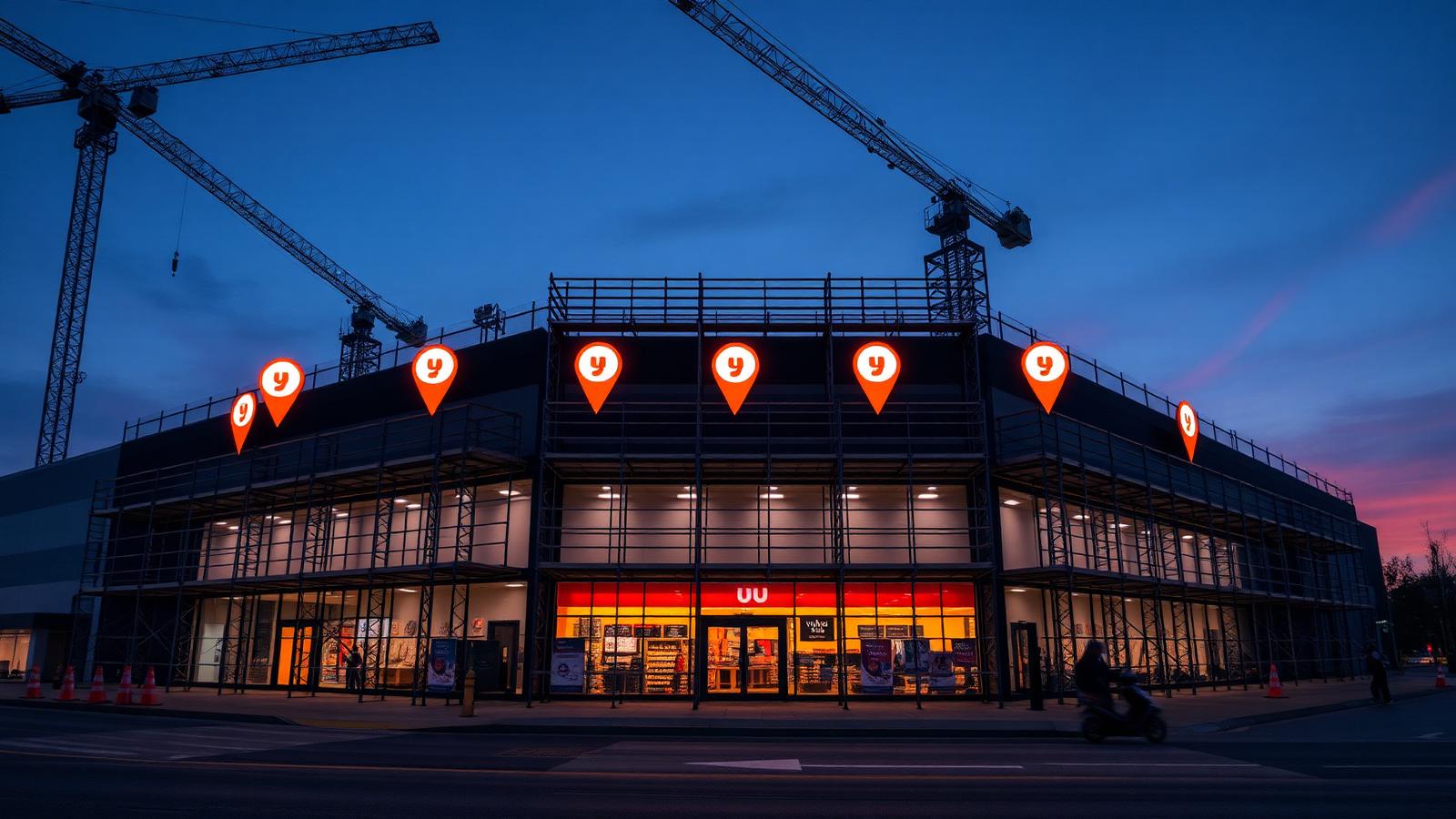
The challenge
Wonder's hybrid kitchen-and-dining format does not map cleanly to legacy occupancy classifications, drive-thru ordinances, or county health-department checklists. The DMV rollout pulled in three plan-review queues at once — Baltimore, Montgomery County, and Prince George's County — each with its own intake standard, fire-marshal expectations, and health-classification interpretation for a use type none of them had seen before.
Wonder had committed to opening {{TBD: stores}} locations in the region inside a single quarter, against an internal baseline of {{TBD: baseline weeks}} weeks per store. By the second site, the team was trending toward {{TBD: trending weeks}} weeks, and the opening cadence was at risk of slipping into the next fiscal quarter.
The intervention
A Commun-ET principal embedded with the Wonder real-estate team across all three jurisdictions, and PermitPilot was deployed as the single workspace for the program inside a {{TBD: rollout window}} window. The first move was unglamorous and high-leverage: rebuilding the submittal package against each jurisdiction's exact format and pre-screening every site through a pre-application meeting with the building department and the relevant fire marshal before any construction document spend.
From there, the program ran on three parallel tracks per site rather than the sequential pattern Wonder had been defaulting to. Building review, fire-life-safety review, and county health review all opened together, instead of waiting for one to clear before opening the next. Conditions of approval that recurred across sites were captured in a shared library so the second and third sites in each jurisdiction never re-litigated a fight already won at the first.
“{{TBD: paste approved client pull-quote here — 1–2 sentences with concrete outcome language}}”
The numbers
Average permit-to-break-ground compressed from a trending {{TBD: before weeks}} to {{TBD: after weeks}}. Reviewer-comment volume on first-round responses dropped {{TBD: percent}}%. Intake-rejection rate fell from {{TBD: before percent}}% to {{TBD: after percent}}%.
In aggregate, the program recovered {{TBD: weeks recovered}} weeks across the rollout and delivered {{TBD: stores hit}} of the planned openings inside the original quarter, with the balance landing inside a two-week tolerance.
What transferred
The DMV templates — jurisdiction-specific intake packets, the pre-application checklist, the conditions-of-approval library — became the defaults for Wonder's national pipeline for FY27. Every market the brand has entered since reuses the operating model that the DMV rollout paid the tuition to build.
The case study walks the same operating cadence covered in the External PM Playbook for Multi-Site Rollouts. For the brand-level Wonder story, see the primary Wonder case study. To see how the model maps to a new program, the External PM service page covers the contract structure.
More from Insights
All articlesHow Long Does a Commercial Building Permit Really Take in 2026?
A jurisdiction-by-jurisdiction breakdown of real plan-review timelines for commercial building permits, what drives the variance, and how operators are compressing it.
The Complete Guide to Multi-Jurisdiction Permitting
How to design, staff, and instrument a permitting program that runs across every active market without losing the schedule or the institutional memory.
AI Permit Automation in 2026: What Works, What Doesn't, What's Hype
An honest accounting of where AI is actually moving the needle in commercial permitting, where it is failing, and how to evaluate vendor claims without getting burned.